Wait, Are You Real? A Totally Normal Look at the “Dead Internet Theory”
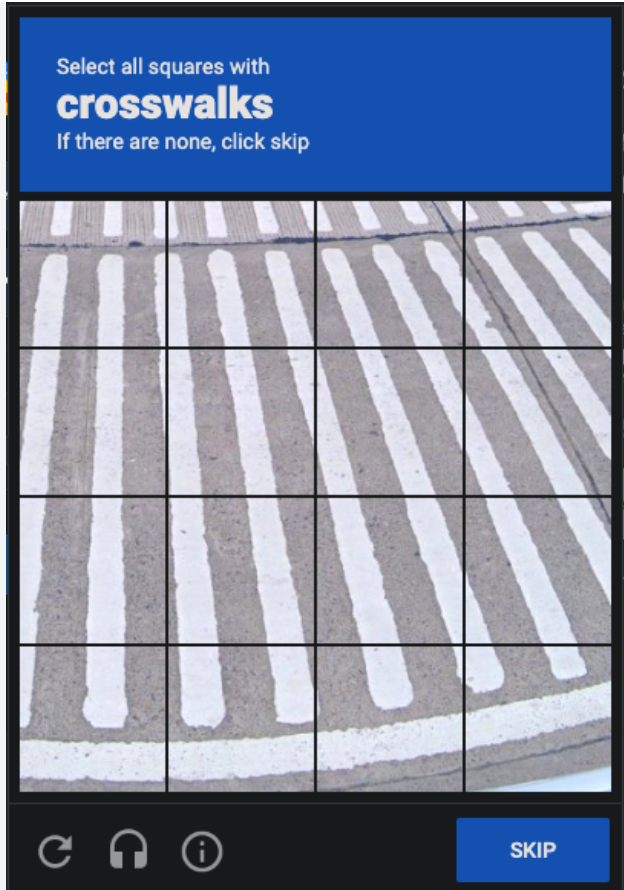
Do a quick Captcha test for me in your head. Click on all the images that contain traffic lights.
Did you pass? Good. You’re probably human. Or, you’re a much smarter bot than the one currently writing this sentence.
Welcome to the “Dead Internet Theory,” the most entertaining technological existential crisis you’ll have today. It’s a conspiracy theory—but unlike the ones your uncle posts on Facebook at 3 AM, this one feels uncomfortably plausible to anyone who works in tech.
The theory is simple: The “human” internet died around 2016.
The hypothesis suggests that the vast majority of traffic, content, social media arguments, and “viral” trends are no longer created by people. Instead, the web is now essentially an empty room where bots shout at algorithms, which then serve ads to other bots, all while the few remaining humans wander around thinking, “Wow, everyone is really angry about air fryers today.”
Sounds crazy, right? But let’s look at the evidence through the lens of someone who builds things for the web.
The Great Hollowing Out
Remember the internet circa 2010? It was chaotic, ugly, and deeply stupid. But it felt alive. People posted blurry photos of their lunch because they genuinely thought it looked good, not because an algorithm optimized for high-saturation food imagery rewarded them.
The Dead Internet Theory posits that around 2016—coinciding with the explosion of sophisticated bots, click farms, and early algorithmic curation—the scales tipped. The noise drowned out the signal.
If you work in web design or SEO, you know this deep down. You’ve seen it.
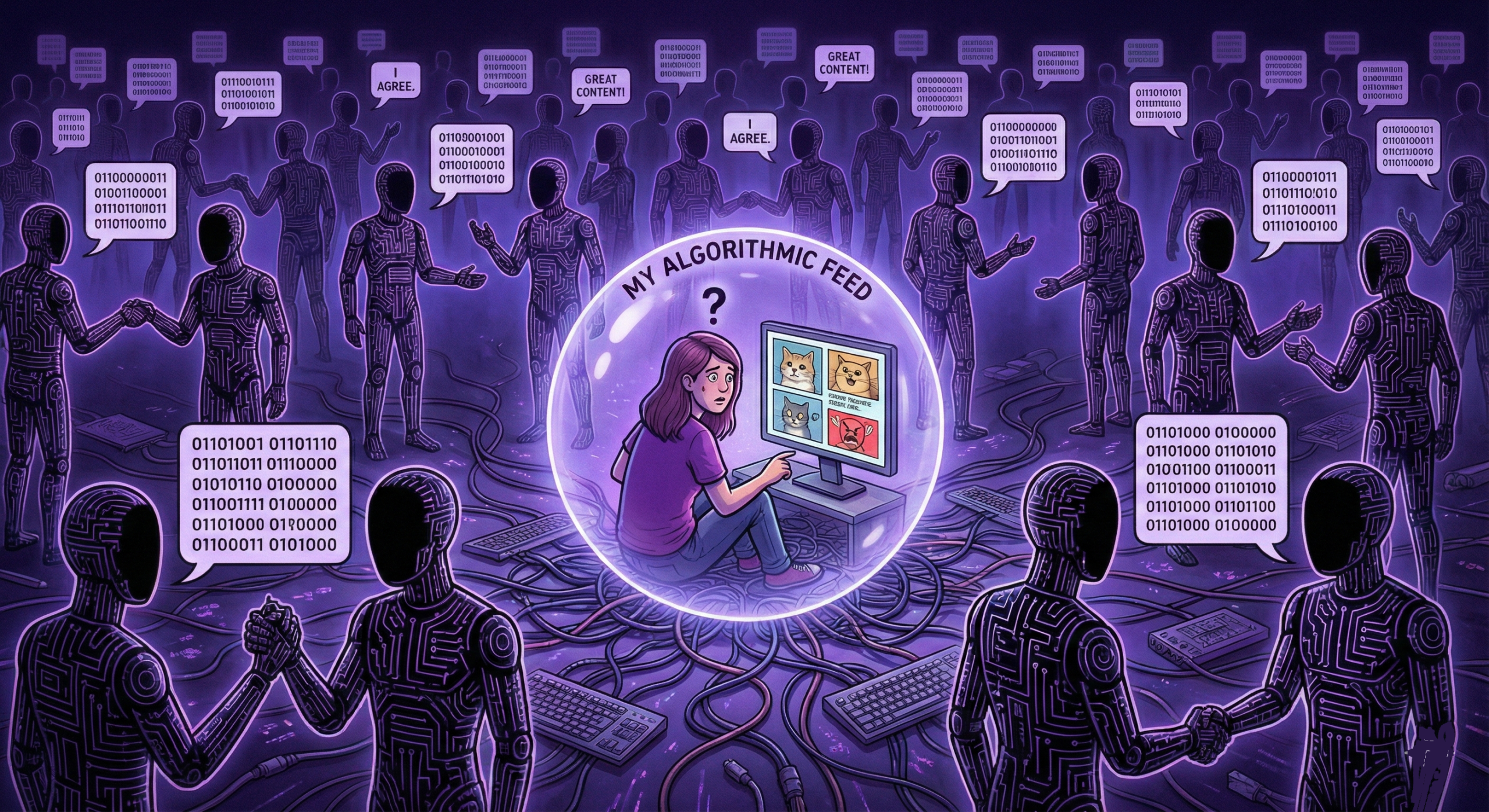
Exhibit A: The Comments Section Go to any major news site or a popular YouTube video. Look at the comments. Are those real people? Really? Or is it thousands of iterations of “Great content!” “I totally agree,” and oddly specific political arguments that sound like they were translated from Russian to English via a calculator?
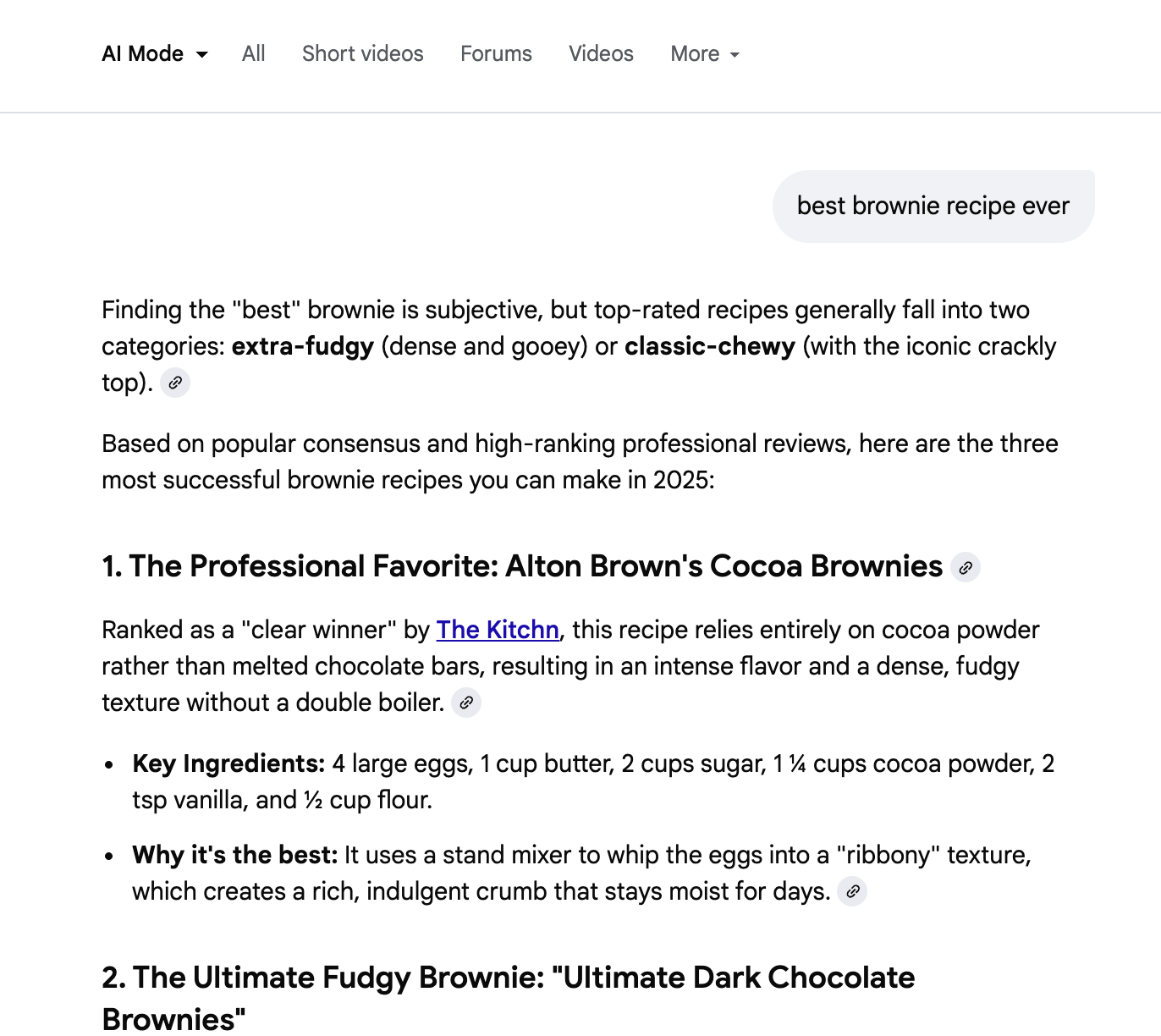
Exhibit B: The SEO Slop-Bucket Have you tried to find a recipe lately? You don’t just get ingredients. You get a 2,000-word AI-generated novella about the author’s grandmother’s crisp autumn mornings in Vermont, designed solely to house enough keywords to appease the Google Gods. Who is writing that? A robot. Who is reading it? Nobody. We are just scrolling past the robot text to get to the brownie recipe.
The Designer’s Existential Crisis
This is where it gets tricky for us. We spend our days obsessing over user experience. We create “personas.” We worry about kerning. We A/B test button colors to squeeze out an extra 0.4% conversion rate.
But if the Dead Internet Theory is even partially true, who are we designing for?
Are we spending 40 hours perfecting a CSS Grid layout just so a Google crawler can parse it slightly faster than an AWS scraper?
Imagine spending weeks designing a beautiful, empathetic onboarding flow for a new app, only to realize later that your top 10,000 “users” are just a script running on a server in Bucharest trying to farm referral codes.
We aren’t designing for humans anymore. We are designing beautiful, accessible, responsive waiting rooms for bots.
The Algorithmic Hall of Mirrors
The creepiest part of the theory isn’t the bots; it’s the curation.
We no longer surf the web; we are fed the web. Algorithms, desperate for engagement, have realized that showing us things we agree with (or things that make us furious) keeps us clicking.
The result is that your internet is totally different from my internet. We are all trapped in solitary confinement cells made of our own browsing history, convinced that the shadows on the wall are the whole world.
When everything is curated, nothing is real. If an AI writes a blog post based on trending topics, and other AIs read it and summarize it for social media, did the information ever actually exist?
So, Are We Done For?
If the internet is dead, it’s a very noisy corpse.
The truth is likely somewhere in the messy middle. The internet isn’t entirely dead, but it is certainly haunted. It’s clogged with synthetic media, driven by non-human incentives.
So, what’s the takeaway for us tech folks?
Maybe it’s time to value “human friction.” As designers and creators, perhaps our new goal isn’t seamless perfection, but obvious humanity.
- Typos might become a signifier of authenticity.
- Weird, inefficient layouts might prove a human made them.
- Content that doesn’t rank well on Google might be the only stuff worth reading.
In the meantime, thanks for reading this article, fellow human.
Please verify you enjoyed this post by selecting all the squares that contain a crosswalk underneath the Subscribe button.